Sewage backup vs flood water cleanup: what is the difference
Sewage backup is contaminated black water that needs disinfection; flood water can be gray or black. Here is how cleanup, cost, and insurance differ in Idaho.
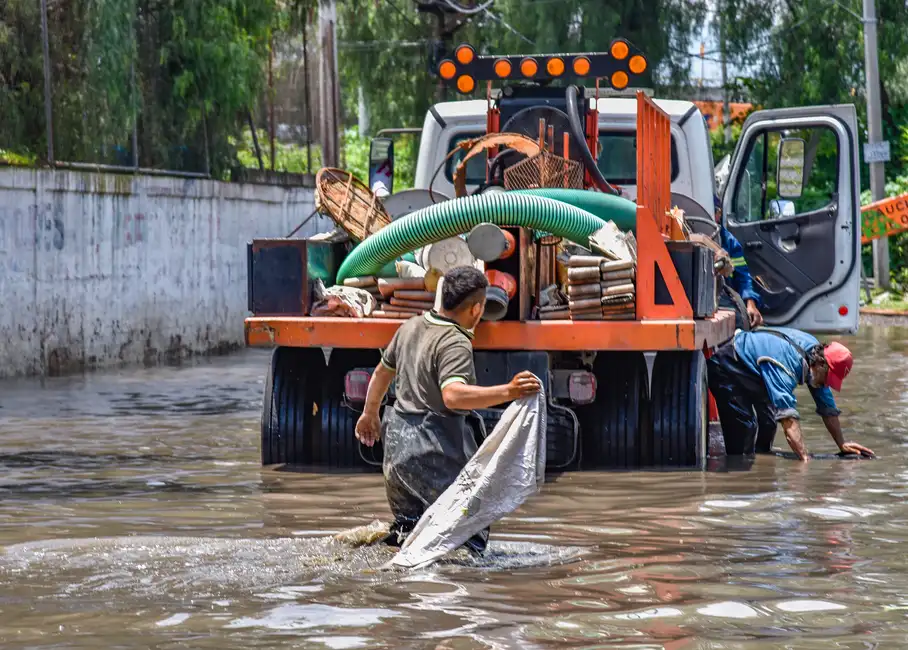
Sewage backup cleanup involves removing water contaminated with human waste - classified as Category 3 black water - which requires full PPE, antimicrobial disinfection, and often replacement of porous materials. Flood water cleanup depends on the source: rainwater intrusion is usually Category 2 gray water and can sometimes be dried and saved, while river overflow or storm surge is Category 3 and treated like sewage. The two jobs look similar on the surface, but the safety protocols, disposal rules, and insurance handling are different enough that mixing them up costs Idaho homeowners thousands.
We run both types of jobs across the Treasure Valley and North Idaho, and the single biggest mistake we see is a homeowner treating a sewage backup like a wet-vac situation. Here is how to tell them apart, what each cleanup actually involves, and what it costs in 2026.
The short answer: contamination category decides everything
The IICRC S500 standard sorts water damage into three categories, and that classification - not the volume of water - drives the entire cleanup plan.
- Category 1 (clean water): supply line breaks, rain through a roof leak, ice maker lines. Safe to dry in place if addressed within 24-48 hours.
- Category 2 (gray water): washing machine discharge, dishwasher overflow, toilet bowl water with no waste, and most storm-driven groundwater. Contains some contaminants; needs antimicrobial treatment.
- Category 3 (black water): sewage backups, toilet trap water with feces, river flooding, and any Category 1 or 2 water that has sat more than 48-72 hours. Grossly contaminated; requires removal and disposal of porous materials.
So when you search Sewage Water Removal in Idaho, you are almost always dealing with Category 3. When you search flood water cleanup, you might be dealing with Category 1, 2, or 3 depending on where the water came from. That is the core of the difference.
What is sewage backup cleanup?
Sewage backup cleanup is the process of extracting, disinfecting, and restoring a structure after wastewater from a sewer lateral, septic system, or municipal main has entered the building. In Idaho, most backups we handle come from three sources: root intrusion in older clay laterals, grease and wipes clogging the line, and municipal surcharge during heavy spring rain when the city main is already full.
The water itself is the hazard. Raw sewage carries E. coli, salmonella, hepatitis A, norovirus, and a long list of parasites. A single gram of sewage can contain millions of bacteria. That is why our technicians wear full-face respirators, Tyvek suits, and double gloves on every sewage job - and why you should not be in the room while we work.
What actually gets removed
Anything porous that touched the water comes out. That includes:
- Carpet, pad, and tack strip
- Drywall up to 12-24 inches above the water line (we cut at the flood cut mark and remove the bottom of the panel)
- Insulation in walls and ceilings
- Laminate and engineered hardwood flooring
- Upholstered furniture and mattresses
Hard surfaces - concrete, tile, framing lumber, metal studs - can usually be saved with pressure washing and an EPA-registered disinfectant. We then run commercial dehumidifiers and air scrubbers with HEPA filtration for 3-5 days until moisture readings return to baseline.
If the backup happened in a finished basement, expect us to remove and dispose of roughly 2-4 cubic yards of material on a typical 500-square-foot finished space.
What is flood water cleanup?
Flood water cleanup is the extraction and drying of water that entered from outside the building envelope - through a door, a window well, a foundation crack, a failed sump pump, or a roof breach. The cleanup protocol depends entirely on what the water touched on its way in.
Rainwater that came straight through a roof leak and landed on a hardwood floor is Category 1. It still needs to be dried within 48 hours to prevent mold, but the materials are often salvageable. Groundwater that pushed up through a floor drain during a storm is Category 2 at best and often Category 3 once it has mixed with soil, lawn chemicals, and whatever was in the storm drain.
We see this constantly in the older neighborhoods around Water Removal in Boise, where 1950s-era homes sit on clay-heavy soil that sheds water instead of absorbing it. A two-inch rain event can push water against a foundation faster than the footing drain can move it away.
What flood water cleanup usually saves
Because the contamination load is lower, more of the structure survives. On a typical Category 1 or 2 flood job we can often:
- Dry carpet in place with weighted extraction and high-velocity air movers if it is caught within 24 hours
- Save drywall above the water line without a flood cut
- Preserve hardwood flooring if we can start drying within 12-24 hours
- Keep cabinets and vanities if the water did not wick into the toe kick
That is a meaningful cost difference. A 500-square-foot flood water job that saves the drywall and flooring can run half the price of a sewage job in the same space.
Sewage backup vs flood water cleanup: side-by-side comparison
Here is the comparison we walk customers through on the phone before we dispatch a crew.
- Water category: Sewage backup is always Category 3. Flood water is Category 1, 2, or 3 depending on source.
- PPE level: Sewage requires full-face respirator and Tyvek. Flood water usually requires N95 and gloves.
- Material removal: Sewage removes all porous materials on contact. Flood water often saves them.
- Disinfection: Sewage requires EPA-registered hospital-grade disinfectant on every surface. Flood water needs antimicrobial treatment on affected areas only.
- Drying time: Sewage jobs run 4-7 days because of the disinfection cycle. Flood water jobs run 3-5 days.
- Insurance: Sewage backup is excluded from standard homeowners policies unless you bought the endorsement. Flood water from outside the home is excluded from homeowners and requires a separate NFIP or private flood policy.
- Typical 2026 cost in Idaho: Sewage backup cleanup runs $3,500-$9,000 for a finished basement. Flood water cleanup runs $1,800-$5,500 for the same square footage.
That insurance line is the one that surprises people. We have watched homeowners assume their policy covers a sewage backup, only to find out at claim time that the endorsement was never added. Call your agent before you need us.
How much does sewage water removal cost in Idaho?
Typical 2026 pricing for sewage water removal in Idaho runs $3,500 to $9,000 for a finished basement, and $1,200 to $3,000 for an unfinished crawl space or utility room. The range is wide because three variables move the number more than anything else.
- Square footage affected. Most crews price extraction and disinfection per square foot, usually $4-$8 per square foot for Category 3.
- Material removal volume. Disposal of contaminated drywall, carpet, and insulation adds $400-$1,200 depending on how much comes out.
- Whether the source is fixed. If the sewer lateral is still blocked, we cannot finish the job until a plumber clears it. That is a separate trade and a separate invoice.
Flood water cleanup in Idaho runs lower - $1,800 to $5,500 for a finished basement - because there is less material removal and a shorter disinfection cycle. A crawl space flood water extraction is often $900 to $2,200.
We give a flat quote before we start. No hourly surprises, no change orders halfway through the dry-out.
Does insurance cover sewage backup in Idaho?
Standard Idaho homeowners policies exclude sewage backup. You need a specific endorsement - usually called "Sewer Backup" or "Water Backup and Sump Discharge" - which typically adds $50 to $150 per year to your premium and covers $5,000 to $25,000 in cleanup and repair.
Flood water is a different animal. Water that enters from outside the home - rising creeks, overland flow, storm surge - is excluded from every standard homeowners policy in the country. You need a separate flood policy through NFIP or a private carrier. NFIP policies have a 30-day waiting period, so you cannot buy one the day before a storm.
What most Idaho policies do cover: sudden and accidental discharge from a burst pipe or a failed supply line. That is why we tell customers to check the source before they call the claim in. If your Burst Pipe Water Removal in Idaho is the cause, you are likely covered. If the water came up through the floor drain during a rainstorm, you are likely not.
Common mistakes homeowners make after a backup or flood
We have walked into hundreds of these jobs, and the same five mistakes show up over and over.
- Running a shop vac on sewage. You aerosolize bacteria into the air you are breathing. A wet/dry vac does not have HEPA filtration and does not disinfect.
- Waiting to see if it dries on its own. Mold colonizes in 24-48 hours. Category 1 water becomes Category 2 in 48 hours and Category 3 in 72. The clock is the enemy.
- Turning on the HVAC. If the system pulls air from the flooded area, you spread contamination through the whole house. Turn it off and call us.
- Pulling up carpet but leaving the pad. The pad is the reservoir. If the pad stays, the moisture stays, and the mold comes back in two weeks.
- Assuming the smell means it is clean. Sewage odor can linger after the bacteria are dead because the organic residue is still in the framing. We use a hydroxyl generator or ozone treatment on the final day to knock that down.
One more: do not file a claim before you know the source. A denied claim still shows up on your CLUE report and can affect your premium at renewal.
When to call a professional
Call us the moment you see water where it should not be, if any of the following is true:
- The water is dark, has visible solids, or smells like sewage
- The affected area is larger than about 10 square feet
- The water has been sitting more than 12 hours
- The source is a sewer line, floor drain, or toilet trap
- You see discoloration on drywall, baseboards, or cabinet toe kicks
- Anyone in the home has asthma, allergies, or a compromised immune system
Our team handles both sewage backup cleanup and flood water extraction across the Treasure Valley and North Idaho. We extract, disinfect, dry, and document the job for your insurance claim. If you are not sure which type of cleanup you are dealing with, send us a photo and we will tell you over the phone.
For homes in the north end of the valley, we also run Water Removal in Coeur d'Alene and the surrounding lake communities, where spring snowmelt and high water tables keep us busy from March through May.
Frequently Asked Questions
What is the difference between sewage backup and flood water cleanup in Idaho?
Sewage backup is always Category 3 black water and requires full disinfection plus removal of all porous materials. Flood water can be Category 1, 2, or 3 depending on the source, so cleanup may only need extraction and drying. The contamination category, not the water volume, drives the protocol.
Is sewage backup more dangerous than flood water in Idaho?
Yes. Sewage carries E. coli, salmonella, hepatitis A, and norovirus at concentrations that rainwater does not. A single gram of sewage can hold millions of bacteria. Flood water from a clean roof leak is far less hazardous than any sewage backup, which is why the two jobs use different PPE and different disposal rules.
Who do I call for sewage backup cleanup in Idaho?
Call a licensed water damage restoration company that handles Category 3 work - not a general handyman or a carpet cleaner. ID Water Remover Pros handles emergency sewage backup cleanup across Idaho, usually on site within 60 to 90 minutes of your call. We extract, disinfect, and dry in one visit cycle.
Does insurance cover sewage backup in Idaho?
Only if you bought the Sewer Backup endorsement, which typically adds $50 to $150 per year and covers $5,000 to $25,000. Standard Idaho homeowners policies exclude sewage backup. Flood water from outside the home is also excluded and needs a separate NFIP or private flood policy with a 30-day waiting period.
How much does sewage water removal cost in Idaho?
Typical 2026 pricing runs $3,500 to $9,000 for a finished basement and $1,200 to $3,000 for an unfinished crawl space or utility room. Flood water cleanup in the same space runs $1,800 to $5,500. Material removal volume and whether the source is fixed are the two biggest cost drivers.
Get help with Water Removal in Idaho
Whether you are looking at a sewage backup or a flooded basement, the first 24 hours decide how much of your home you keep. We handle both, and we tell you straight which one you are dealing with before we start.
Call ID Water Remover Pros at (833) 640-1438 for emergency water removal in Idaho. We answer 24/7 and dispatch the closest crew.