Storm Water Removal After a Nampa Thunderstorm
A Nampa thunderstorm can dump two inches of rain in an hour. Here is how storm water removal works, what it costs in 2026, and when to call a pro.
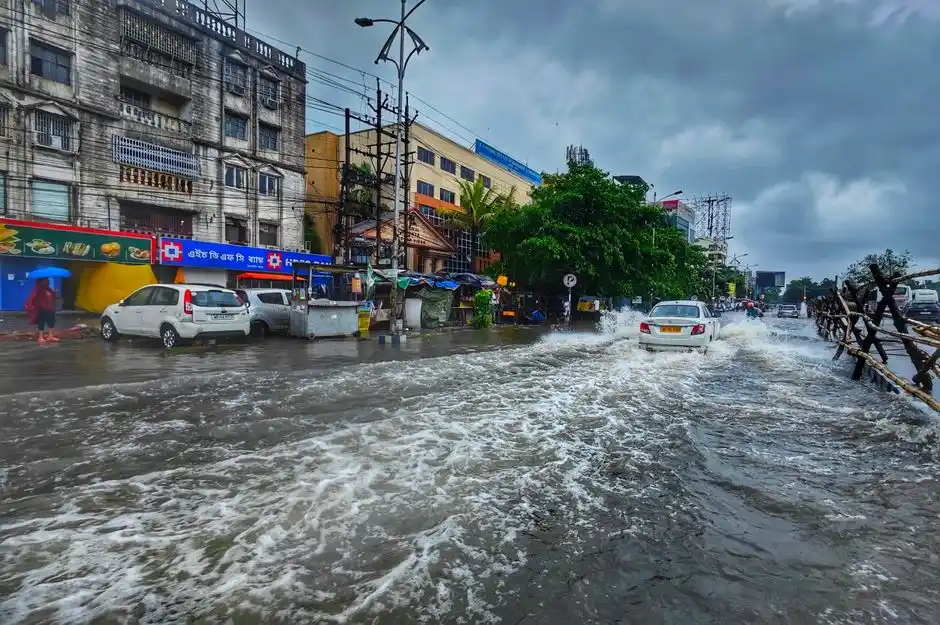
Storm water removal after a Nampa thunderstorm is the process of extracting standing water, drying the structure, and sanitizing anything the flood touched - and it needs to start within 24 to 48 hours to prevent mold and structural damage. The longer water sits, the more it costs to fix. A typical summer thunderstorm here can drop 1.5 to 2 inches of rain in under an hour, and Nampa's clay-heavy soil sheds that water fast - straight toward your foundation, window wells, and garage slab. This post covers why Nampa floods the way it does, what to do in the first hour, how professional extraction works, what it costs in 2026, and how insurance usually handles it.
Why Nampa Thunderstorms Flood Homes So Fast
Nampa sits in the Treasure Valley where summer thunderstorms build over the Owyhee Mountains and dump their load in a narrow band. The ground here is a mix of hardpan and clay that absorbs almost nothing once it is saturated. Ten minutes of heavy rain and the water has nowhere to go but downhill - into your window wells, your garage, your crawl space.
Three things make it worse in Nampa specifically:
- Flat lots with shallow swales. Many subdivisions built between 1998 and 2015 have drainage swales that only handle about a half-inch of rain per hour. A two-inch storm overwhelms them.
- Mature trees and root intrusion. Older neighborhoods near downtown Nampa have 50-year-old maples and cottonwoods whose roots crack clay sewer laterals and storm drains.
- Hard, sun-baked soil. After a dry July, the top inch of soil repels water like a parking lot. It takes 20 to 30 minutes of steady rain before it starts absorbing anything.
We see the same pattern every August: a cell parks over the Nampa area for 45 minutes, and by evening we are pumping basements on the north side and along the Greenhurst corridor. If you have ever dealt with Water Removal in Nampa after a storm, you know the drill - the water comes in fast and it does not leave on its own.
What to Do in the First Hour After Thunderstorm Flooding in Nampa
Your first hour determines whether this is a $1,200 cleanup or a $12,000 rebuild. Move in this order:
- Kill the power to any flooded area. Do not wade into standing water near outlets or appliances. If you cannot reach the breaker safely, call an electrician first.
- Document everything. Take wide photos of each room, then close-ups of the water line on walls, furniture legs, and baseboards. Your adjuster will want these.
- Move what you can. Get rugs, cardboard boxes, electronics, and anything porous off the wet floor. Anything that has been submerged for more than an hour is usually a loss.
- Start extracting. A wet/dry shop vac will pull up surface water from a small area. A sump pump or utility pump handles anything deeper than an inch.
- Get air moving. Box fans and a dehumidifier slow the spread, but they will not dry a structure. That takes commercial equipment.
Do not run your HVAC system if the water reached the furnace or ductwork. You will blow moisture and whatever was in the floodwater through every room in the house.
How Professional Storm Water Extraction in Nampa Idaho Works
Professional storm water extraction in Nampa Idaho follows a standard sequence that the IICRC calls the S500 standard for water damage restoration. Here is what actually happens when we roll up:
Step 1: Source control and safety check
We find where the water is coming in - a failed window well, a backed-up floor drain, a cracked foundation wall, a sump that quit. If the source is still active, extraction is pointless. We also test for category 3 water (sewage-contaminated) versus category 2 (gray water) because that changes the entire scope.
Step 2: Extraction
Truck-mounted extractors pull 12 to 18 gallons per minute. A finished basement with two inches of water typically takes 2 to 4 hours to extract. We use weighted extraction heads on carpet to pull water out of the pad and backing.
Step 3: Moisture mapping
We use thermal imaging and pin-type meters to find water you cannot see - inside wall cavities, under hardwood, behind baseboards. Water wicks up drywall 12 to 18 inches above the visible flood line.
Step 4: Drying
We set air movers and commercial dehumidifiers based on the cubic footage of the affected area. A 1,000-square-foot basement usually needs 8 to 12 air movers and 2 to 3 LGR dehumidifiers running 3 to 5 days. We check moisture readings daily and adjust.
Step 5: Sanitizing and documentation
Floodwater carries bacteria, lawn chemicals, and whatever was on the street. We apply an EPA-registered antimicrobial to all affected surfaces. You get a moisture log and photo documentation for your insurance claim.
If the storm also took out your sump pump, we handle Sump Pump Failure Water Removal in Idaho with the same equipment and the same documentation.
How Much Does Storm Water Removal Cost in Nampa?
Typical 2026 pricing in the Nampa area runs $1,200 to $3,500 for a single-room extraction and dry-out, and $4,000 to $12,000 or more for a finished basement with contaminated water and damaged drywall. Here is the breakdown we see most often:
- Emergency call-out and assessment: $150 to $350
- Extraction (per room, up to 2 inches): $400 to $900
- Drying equipment (per day, per room): $75 to $150
- Antimicrobial treatment: $0.25 to $0.75 per square foot
- Drywall removal and disposal (per linear foot): $3 to $8
- Carpet and pad removal (per square foot): $1.50 to $3.00
Most Nampa jobs land between $2,000 and $6,000 all-in. The variables that move the number most are how long the water sat, whether it is category 3 (sewage) water, and how much finished material has to come out. A garage slab that gets wet and dries is cheap. A finished basement with engineered hardwood and insulated walls is not.
We quote the job before we start. No surprise line items.
Does Insurance Cover Storm Water Damage in Nampa Idaho?
Standard homeowners insurance in Idaho covers sudden and accidental water damage from a storm - a tree branch through a window, a roof leak that lets rain in, a sump pump that fails and floods the basement. It typically does not cover surface water that rises from outside and enters through a foundation crack or a window well. That is considered flood damage, and flood coverage is a separate policy through the NFIP or a private flood carrier.
The line between the two is where most Nampa claims get disputed. If the water came in through a broken window during the storm, that is usually covered. If it seeped in through the foundation because the ground was saturated, that is usually not. We document the entry point carefully because that photo often decides the claim.
Two things worth knowing:
- Idaho does not require flood disclosure on home sales, so many Nampa homeowners do not know their property is in a flood-prone area until the first storm.
- Most policies require you to mitigate further damage - meaning if you do nothing and the mold spreads, the additional damage may be denied.
Call your adjuster the same day. Then call us. We work directly with most major carriers and can bill them directly on approved claims.
Common Mistakes After a Nampa Thunderstorm
We see the same five mistakes over and over, and each one adds thousands to the final bill:
- Waiting for it to dry on its own. In Nampa's dry summer air, a wet carpet can feel dry on top in 24 hours while the pad and subfloor stay soaked for a week. Mold starts in 48 to 72 hours.
- Using a shop vac and calling it done. A shop vac pulls surface water. It does not pull water out of drywall, baseboards, or the sill plate.
- Running the HVAC. If the furnace or ductwork got wet, you are spreading contamination through the whole house.
- Throwing away damaged materials before documenting. Your adjuster needs photos of the wet drywall and ruined carpet before it hits the dumpster.
- Not testing for sewage. If the storm overwhelmed the city sewer and your floor drain backed up, that water is category 3. It requires different handling, different PPE, and different disposal.
If your floor drain backed up during the storm, that is a different job than a window well overflow. We handle Sewage Water Removal in Idaho with full containment and disposal because that water is a health hazard, not just a mess.
When to Call a Professional
Call us when any of these are true: the water is deeper than one inch, it has been sitting more than a few hours, it reached drywall or carpet, it smells like sewage, or you cannot find where it is coming from. Those are the jobs where a shop vac and a fan will not cut it.
ID Water Remover Pros handles storm water removal across Nampa and the surrounding Treasure Valley. We are available 24/7 during storm season, we bring our own power and equipment, and we document everything for your insurance claim. If you are not sure whether you need us, call and describe what you are seeing - we will tell you straight.
Frequently Asked Questions
Who does storm water removal in Nampa Idaho?
ID Water Remover Pros provides 24/7 storm water removal in Nampa and the surrounding Treasure Valley, including Caldwell, Meridian, and Kuna. We handle extraction, structural drying, antimicrobial treatment, and insurance documentation. Call (833) 640-1438 any time during or after a storm.
How much does storm water removal cost in Nampa?
Most Nampa storm water jobs run $1,200 to $3,500 for a single room and $4,000 to $12,000 for a finished basement with contaminated water. The final price depends on water depth, how long it sat, and how much finished material has to be removed. We quote before we start.
What should I do after a thunderstorm floods my home in Nampa?
Cut power to flooded areas, document with photos, move porous items off the floor, and start extracting surface water with a shop vac or pump. Then call a professional within 24 hours. Mold begins growing in 48 to 72 hours, so the clock matters more than anything else.
Does insurance cover storm water damage in Nampa Idaho?
Most homeowners policies cover sudden storm damage like a roof leak or broken window, but not surface water that rises from outside and enters through a foundation crack. That requires separate flood insurance. We document the entry point carefully because it often determines the claim outcome.
How quickly can storm water be removed in Nampa?
We can typically be on-site within 60 to 90 minutes during storm events. Extraction of a standard basement takes 2 to 4 hours. Full structural drying runs 3 to 5 days with daily moisture checks. The sooner we start, the shorter the dry-out.
Get Help With Water Removal in Nampa
If a Nampa thunderstorm left water in your basement, garage, or crawl space, call us now. Every hour you wait, the damage spreads and the repair bill grows.
Call ID Water Remover Pros at (833) 640-1438 - 24/7 storm response across Nampa and the Treasure Valley.